

How Many People Can a Standard Dining Table With Chairs Seat?
A “6-seater” dining table set rarely seats six comfortably every day. Real capacity depends on the table’s usable edge space, the chair width (and whether it has arms), and how much personal space you want at meals.
As a practical rule of thumb, allow around 55–60 cm (22–24 in) of table edge per person for everyday comfort. If you’re using wider upholstered chairs or armchairs, plan closer to 60–65 cm (24–26 in) per person.
Most dining chairs land roughly in these ranges:
- Armless dining chair: about 45–50 cm wide
- Upholstered chair: about 50–55 cm wide
- Armchair: often 55–65 cm wide (and needs extra elbow space)
Also, consider “formal” versus “everyday” seating. Many homes have a set that’s comfortable for fewer people day-to-day, then stretches for guests. A so-called 6-seat set might feel perfect for 4 daily, then work for 6 on birthdays, holidays, or when you don’t mind sitting a bit closer.
Store listings often show the maximum capacity. Before buying a dining table set for sale, check the table dimensions, the chair width, and whether the table legs or base reduce the usable edge.
Quick seating guide by table shape (what most people forget)
Your table shape changes how easily you can add seats and how comfortable the “extra” seats feel.
Rectangular tables are the easiest to scale. You can usually add one seat at each end if the table is wide enough and the legs don’t block knees.
From a usability and experience design perspective, a dining table and chairs set with a round configuration naturally enhances conversation flow, as all participants share equal positioning along the curve. Capacity scales with diameter, making this format effective for social engagement.
However, a round dining table and chairs set typically requires greater overall floor space, as accommodating a circular footprint within a room can be less space-efficient than linear alternatives.
Square tables suit 2 to 4. Beyond four, they can feel tight unless the table is large or extendable.
Oval tables behave like rectangles but with softer corners, which can make moving around them easier in tighter rooms.
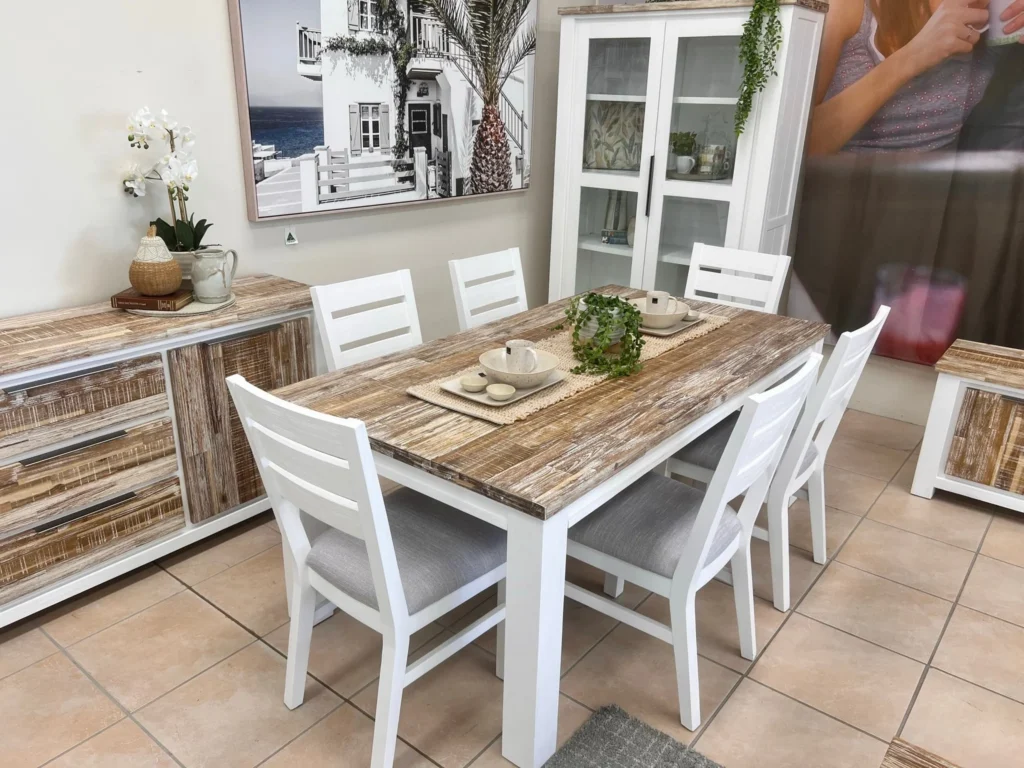
What “4-seater / 6-seater / 8-seater” usually means in store listings
In most listings, “4-seater / 6-seater / 8-seater” assumes standard, armless chairs, minimum elbow room, and no bulky upholstery. It’s not a lie, but it is often the “squeeze” number.
A better check is measuring the usable edge, not just the overall length. For example, thick corners, wide frames, or leg placement can reduce where chairs can actually sit.
Base type matters too. Pedestal bases often seat more comfortably because you’re not fighting corner legs, especially when someone needs to sit slightly off-centre or at an end position.
What Size Dining Table With Chairs Is Best for 4, 6, or 8 People?
Pick a size that suits your daily meals first, then plan for guests second. If you entertain occasionally, an extendable table or a bench can give you flexibility without making the room feel permanently crowded.
The sizes below are comfort-forward ranges rather than maximum squeeze. They’re designed to help people eat, talk, and get in and out without constant shuffling.
If you’re shopping for a small dining table and chairs (especially for flats or open-plan living), prioritise a compact footprint and a smarter base, like pedestal or trestle styles, to make the same dimensions feel roomier.
Recommended table sizes (comfortable everyday seating)
These are good targets for most homes using typical dining chairs.
4 people
- Rectangular: 120–140 cm long (47–55 in), 75–90 cm wide (30–35 in)
- Round: 90–110 cm diameter (35–43 in)
6 people
- Rectangular: 160–180 cm long (63–71 in)
- Round: 120–135 cm diameter (47–53 in)
8 people
- Rectangular: 200–240 cm long (79–95 in)
- Round: 150–180 cm diameter (59–71 in)
Wider tables are great for shared dishes, centrepieces, and serving platters, but they can steal walkway space. If your dining zone is tight, a slightly narrower table often feels better day to day.
Chair count vs bench seating (when a dining set can flex)
A bench is the easiest way to add seating without adding bulk. It can often fit an extra person “in a pinch”, and it tucks under the table to save space when not needed.
A popular setup is 4 chairs plus a bench on one side, which gives a “6-seat” feel without filling the room with chair backs. It’s also practical for families with children because kids can slide along rather than constantly moving chairs.
The trade-off is comfort. Benches are not ideal for long dinners for everyone, so many households mix a bench with supportive chairs for the best balance.
How Much Space Do You Need Around a Dining Table With Chairs?
You need room for three things: the table footprint, the space to pull chairs out, and clear walkways for anyone passing through. If you plan this well, even a larger table can feel effortless to live with.
Chair style changes the equation. Armchairs and bulky upholstery need more clearance. Slim, armless chairs that tuck in neatly can reduce how much space the dining area demands.
A simple tip before buying is to mark the table and chair zone on the floor with painter’s tape. It’s the quickest way to test whether a dining table set for sale will actually work in your room.
Clearance guidelines you can actually measure
Use these as practical starting points.
- From table edge to wall or furniture: 90 cm (35 in) minimum to sit and scoot back
- For easier movement behind seated diners: 100–120 cm (39–47 in)
- If there’s a walkway behind chairs (busy kitchen traffic): aim for 110–120+ cm (43–47+ in)
If there’s a sideboard, cabinet, or drawers nearby, factor in opening space. You want enough room for drawers or doors to open plus someone to sit down without everything clashing.
Base and leg placement: the hidden factor in comfort
Two tables with the same top size can feel totally different because of what’s underneath. Four legs at the corners can block end seating and sometimes force chairs to sit awkwardly between legs.
Pedestal and trestle bases usually improve knee room and make it easier to add an extra chair when needed. Also check the underside clearance and apron height, especially if you’re pairing the table with thicker upholstered chairs that sit higher or wider.
What Dining Table With Chairs Layout Works Best for Small Dining Rooms?
In small rooms, the goal is simple: get enough seats without turning the area into an obstacle course. The best layout usually prioritises clear circulation first, then adds flexibility for guests.
Good small-space options include pushing one side of a rectangular table against a wall, using a corner banquette, choosing a round table to soften pathways, or buying an extendable table that “earns” its footprint only when you need it.
The same thinking people use for small-space sofas applies to dining. Choose pieces that do more with less, keep the centre of the room moving, and avoid blocking open-plan flow.
Best table shapes for small spaces (and when to use each)
Round with a pedestal base is often the easiest in tight spaces. It has no sharp corners and makes it simpler to move around, especially in square rooms.
Rectangular and narrow works best in long, narrow rooms. You can push one side against a wall for daily use, then pull it out when guests arrive.
Square suits compact nooks for 2 to 4. If you host occasionally, look for extendable or flip-top designs.
Oval is a useful compromise when you want rectangle-like seating but softer corners for easier flow.
Space-saving chair choices that still feel comfortable
Choose chairs that reduce both physical and visual bulk. Armless, slim-profile chairs help circulation and can make a small dining area feel calmer.
Look for chairs that tuck fully under the tabletop, and check seat height versus the table apron so knees fit comfortably. Upholstered chairs add comfort, but they also take more space, so balance softness with the room size.
If you need flexibility, keep two everyday chairs and store two lightweight extras elsewhere for visitors.
How Do You Choose the Right Dining Table With Chairs for Your Household?
Choose for real life, not the one perfect dinner party you imagine once a year. Think about who eats most nights, whether children need durable finishes, how often guests visit, and if the table doubles as a work-from-home spot.
A good approach is buying for daily comfort first, then adding flexibility with an extendable top, a bench, or a couple of spare chairs. If you’re investing in a set, prioritise sturdy joinery and easy-care materials so it stays looking good through everyday use.
If you’re in Australia and want a smoother buying experience, look for a store that combines quality and affordability with helpful staff, fast delivery, and a curated range that makes choosing easier.
Match seating to your routine (not your best-case scenario)
If it’s 1–2 people most nights, a 2–4 seat small dining table and chairs setup can feel more spacious, with an extendable option for weekends.
If you host monthly, prioritise true 6-seat comfort or an extendable 4–6 setup so you are not cramped every day.
If you have a larger family, plan for 6–8 daily and make sure there’s clearance for school bags, movement, and quick clean-ups.
Comfort checklist for chairs (so people actually want to sit)
Start with fit: ensure comfortable leg clearance between the seat and tabletop, following a dining chair ergonomics and table clearance measurement guide. Then assess support, since a chair may appear visually appealing but still cause fatigue if back support is inadequate or seat depth is misaligned.
Armrests can improve comfort, but they also reduce seating capacity and may prevent chairs from sliding fully under the table. Finally, align materials with your lifestyle—fabric and leather-look finishes offer warmth and comfort, while households with higher usage typically benefit from easy-clean surfaces and stain-resistant upholstery options.
A simple buying process (measure once, buy once)
- Measure the room and mark a “no-go” walkway zone.
- Choose a table shape that fits your circulation.
- Confirm chair count using per-person edge space and real chair widths.
- Double-check base and leg interference, plus clearance to walls and cabinets.
- Compare dining table set for sale listings by dimensions, materials, and delivery options.